Water is part of nearly everything we do, from making morning tea to washing clothes, cleaning the kitchen, and keeping commercial equipment running. Yet most of us rarely stop to consider what’s actually in the water coming through the tap. We might notice a strange taste, white marks around the faucet, or soap that refuses to lather properly, but figuring out what those signs mean isn’t always straightforward.
The truth is that water quality can vary from one property to another, even within the same neighbourhood. Some households need little more than basic filtration, while others may benefit from softening or a more specialised treatment system. The best solution depends on the water source, the substances present, and how the water will be used.
Understanding a few essential facts can make the process much less confusing. Here’s a practical look at everyday water concerns, the treatment options available, and the questions worth asking before investing in a system.
What Does Water Quality Really Mean?
Water quality isn’t simply about whether water looks clean. Clear water can contain dissolved minerals or other substances that aren’t visible to the naked eye. Likewise, a slightly unusual taste doesn’t automatically mean the water is unsafe to drink.
Water quality is assessed using several characteristics, including appearance, odour, pH, mineral content, and the presence of particular contaminants. Which measurements matter most depends on the source and intended use. Drinking water, water used for manufacturing, and water supplied to heating equipment may all have different requirements.
For homeowners, changes in taste, colour, or smell can be useful warning signs. However, they aren’t a substitute for proper testing. If the water supply changes suddenly, or there’s a concern about contamination, contact the relevant water supplier or local authority and arrange appropriate testing.
Businesses should take a similarly practical approach. Restaurants, hotels, offices, and industrial facilities may depend on consistent water quality for hygiene, equipment performance, or production. Understanding the supply before choosing treatment equipment helps avoid unnecessary spending and makes it easier to select a system that addresses the actual problem.
What Are the Most Common Water Quality Concerns?
People often have common questions about water quality and treatment, particularly when something changes at home. Why does the water taste different? What causes white deposits on taps? Is a filter necessary, and how can anyone know which one to buy?
These are reasonable questions because water problems don’t all have the same cause.
A chlorine-like taste or smell may be associated with disinfectants used in municipal water treatment. Sediment can make water appear cloudy or leave particles in fixtures. Mineral-rich water may produce scale, while certain metals or other contaminants require specific testing to identify.
The first step is to avoid jumping to conclusions. A cloudy glass of water, for example, may contain tiny air bubbles that disappear after standing, although persistent cloudiness deserves investigation. White deposits may suggest mineral scale, but their appearance alone cannot establish the full chemical composition of the water.
If you rely on a private well, periodic testing is particularly important because water quality can be affected by local geology, nearby land use, and changes in the environment. Testing recommendations vary by location, so consult a qualified laboratory or local public health authority for guidance.
How Can Water Testing Help?
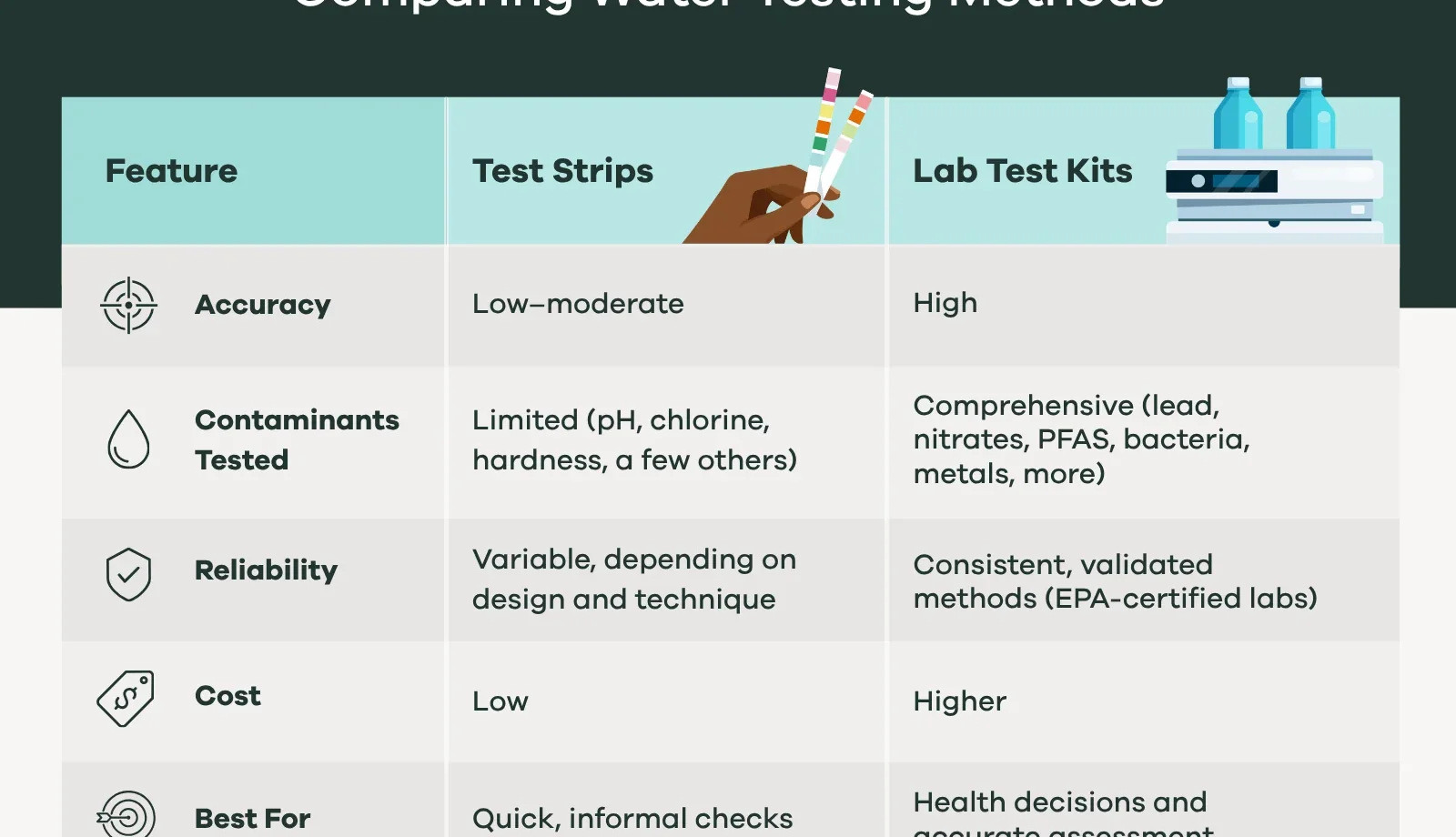
Water testing gives you information that appearance and taste cannot provide. Depending on your concerns, a test may examine hardness, pH, dissolved solids, bacteria, nitrates, metals, or other substances relevant to your water source.
Some businesses and service providers offer complimentary water testing as an introductory service. This can be a convenient way to learn more about your water before considering treatment equipment. However, it’s worth checking exactly what’s included.
A basic demonstration or screening may measure only a small number of characteristics. It shouldn’t be assumed to detect every contaminant or confirm that water is safe to drink. More detailed laboratory analysis may be needed when specific health concerns, regulatory requirements, or private-well conditions are involved.
Before accepting a test, ask which parameters will be measured, what method will be used, and whether the results will be provided in writing. If a provider recommends a treatment system afterwards, compare the recommendation with the actual test findings.
The aim is to understand the water, not to purchase equipment simply because a salesperson says it’s necessary. Reliable results help you make an informed decision and avoid paying for treatment you may not need.
What Is Hard Water, and Why Does It Matter?
One of the most common household water concerns is hard water, which contains relatively high concentrations of dissolved calcium and magnesium. These minerals are naturally present in many water sources and aren’t usually visible while the water is flowing from the tap.
You may notice the effects when white or chalky deposits appear on faucets, shower screens, and kettles. Soap may lather less easily, and laundry can sometimes feel stiff. In buildings with water heaters, boilers, or other hot-water equipment, mineral scale can gradually accumulate on internal surfaces.
Hardness isn’t the same as contamination, and it doesn’t automatically mean water is unsafe. Whether treatment is worthwhile depends on the level of hardness and the inconvenience or equipment problems it causes.
A water softener is a common option for reducing calcium and magnesium. Many conventional softeners use an ion-exchange process, replacing hardness minerals with other ions, typically sodium. Because the process adds sodium to the treated water, people with specific dietary or medical concerns should discuss suitable options with a qualified professional.
Other approaches may help manage scale in particular applications, but their performance varies. A hardness test is a useful starting point before choosing any solution.
Which Water Treatment System Should You Choose?
There isn’t one filter that solves every water problem. Different technologies are designed for different purposes, and choosing the wrong one can leave the main concern unresolved.
Sediment filters capture suspended particles such as sand and rust. Activated carbon filters can reduce certain tastes, odours, and chemicals. Water softeners address hardness minerals, while reverse osmosis systems can reduce many dissolved substances when correctly installed and maintained.
Ultraviolet systems may be used to control microorganisms, but they don’t remove dissolved minerals or most chemical contaminants. Their effectiveness also depends on appropriate operating conditions and suitable water pretreatment.
Before purchasing a system, identify the problem through suitable testing. Consider the daily volume of water required, the available installation space, replacement-filter costs, and maintenance needs. A small under-sink filter may be sufficient for a specific drinking-water concern, whereas a large property may require treatment at the point where water enters the building.
It’s also wise to check the manufacturer’s performance claims and look for credible independent certification where available. A system should be selected for the contaminants it is intended to reduce, not simply because its packaging lists a long collection of benefits.
How Often Should Filters Be Replaced?
Every filtration system has maintenance requirements, and ignoring them can affect performance. Filters may become clogged, carbon media can lose effectiveness, and reverse osmosis membranes can require replacement or servicing over time.
The correct schedule depends on the filter type, water quality, usage, and manufacturer’s instructions. Some systems include indicator lights or monitoring features, but not every unit has them. Keeping a simple record of installation dates can help prevent missed replacements.
Use compatible cartridges and follow instructions for flushing, sanitising, and restarting the equipment. If water flow changes unexpectedly or the system begins leaking, investigate rather than assuming a filter change will solve everything.
For complex commercial systems, professional servicing may be worthwhile. A qualified technician can inspect connections, check performance, and identify developing issues before they lead to larger problems.
Making a Confident Decision About Your Water
Water treatment doesn’t need to be complicated, and more equipment isn’t always better. The most sensible approach begins with understanding your water source, identifying the concern, and selecting a solution that addresses it directly.
Pay attention to changes in taste, odour, appearance, and flow, but remember that these observations cannot identify every possible contaminant. When there’s a genuine safety concern, use appropriate testing and seek advice from qualified professionals or relevant authorities.
A little knowledge goes a long way. By asking the right questions, reviewing test results carefully, and keeping treatment equipment properly maintained, you can make more confident decisions about the water your family or business uses every day.
Clean, suitable water is too important to leave to guesswork. Start with reliable information, choose treatment for a clear reason, and let the evidence guide the next step.