The little things around the house often tell you more than you expect. White marks keep appearing on the kitchen tap, the shower screen never seems completely clean, and soap disappears before it can build a decent lather. You scrub everything, put the cleaning products away, and a few days later the same problems return. If this sounds familiar, hard water may be part of the reason.
Hard water is common in many communities. It is not necessarily unsafe to drink, but its mineral content can affect cleaning, plumbing, and the performance of water-using appliances. Understanding why it happens—and what a softener can realistically do—makes it easier to choose a solution that suits your home.
What Hard Water Contains
Water naturally picks up minerals as it moves through soil and rock. Two of the most common are calcium and magnesium, which contribute to water hardness. The amount varies according to local geology and the source supplying a property. Some homes receive relatively soft water, while others experience noticeable scale and soap residue every day.
Hardness is usually measured by testing a water sample. The result can help you determine whether a treatment system is necessary and how much capacity it should have. Guessing based on white marks alone can be misleading, since deposits and stains may have several causes.
It is also worth remembering that water hardness is not the same as overall water quality. A test for hardness tells you about mineral content, but it does not automatically establish whether water contains bacteria, heavy metals, or other substances of concern. If you use a private well or have specific safety concerns, ask a qualified laboratory or water professional which additional tests are appropriate.
Why Hard Water Can Be Frustrating
One of the first things people notice is the residue left behind after water dries. Mineral deposits can form around faucets, showerheads, kettle interiors, and other frequently wet surfaces. With time, these deposits may become more difficult to remove, especially if they are allowed to build up.
Hard water can also interfere with soap and some detergents. Instead of rinsing away cleanly, soap may combine with minerals and leave a film on skin, bathroom surfaces, or clothing. This can make washing feel less satisfying and turn ordinary cleaning into a repetitive chore.
Appliances may be affected as well. Scale can accumulate in water heaters and other equipment, particularly where water is heated regularly. The impact depends on the hardness level, the appliance, and how the equipment is used. Not every household will experience major problems, but reducing excessive hardness can help manage mineral deposits.
These inconveniences may seem minor individually. Together, though, they can mean more time spent cleaning and greater attention to household maintenance.
How a Water Softener Works
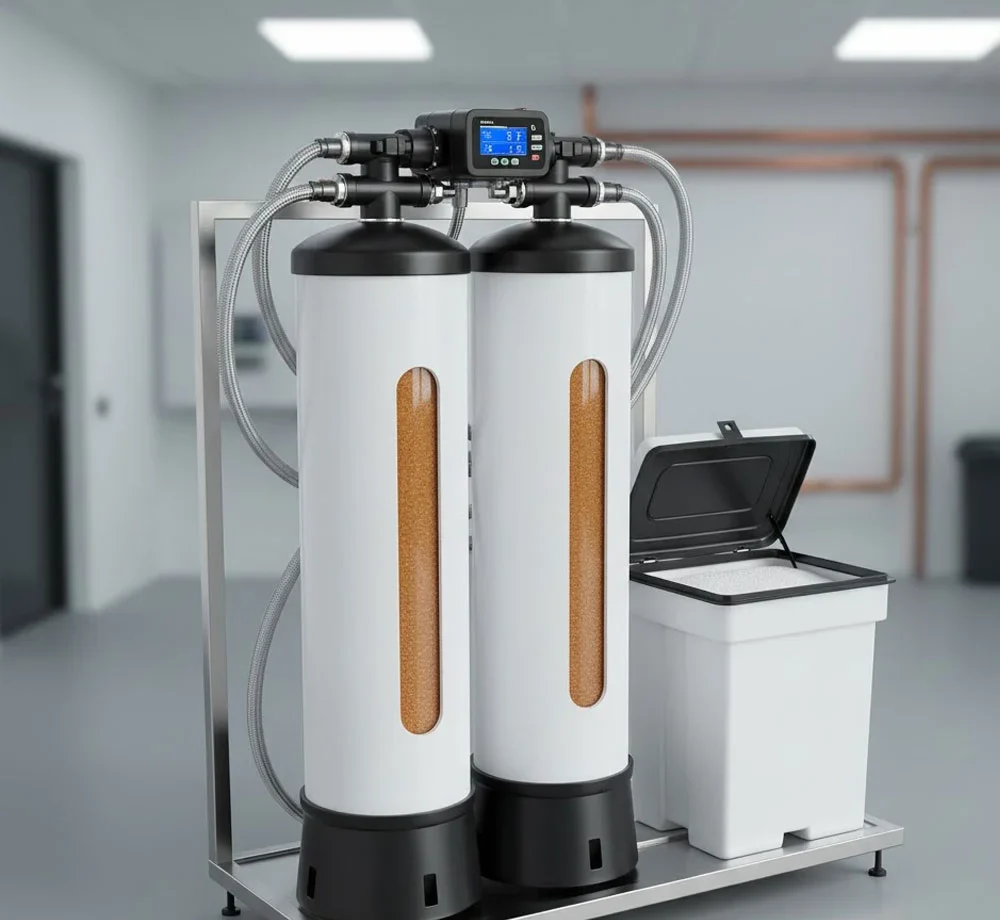
Most conventional water softeners use a process called ion exchange. Inside the unit, a resin bed attracts hardness minerals and exchanges them for sodium ions or, in some systems, potassium ions. When the resin reaches its working capacity, the unit regenerates so it can continue treating water.
For homes with significant hardness, salt-based water softener systems are a common option. They can reduce the minerals responsible for scale and help soap and detergent perform more effectively. Many households find that bathroom surfaces are easier to maintain and glassware develops fewer mineral spots after treatment.
However, a softener is designed primarily to reduce hardness. It should not be treated as a complete water-purification system. It will not necessarily remove substances such as arsenic, nitrate, or microorganisms. If test results identify other concerns, you may need a separate treatment method designed and verified for those specific substances.
Correct sizing matters, too. A system that is too small for the household’s water use may regenerate frequently, while an oversized unit can add unnecessary expense. A water professional can use the test results and estimated daily demand to help determine a suitable capacity.
What Changes Might You Notice?
After a softener is installed and adjusted properly, the most noticeable changes often involve cleaning. Soap may lather more easily, and mineral spots may become less common. You might also spend less time dealing with scale on taps and shower fixtures.
Some people describe the result as cleaner-feeling water, particularly when washing their hands or showering. That description reflects a personal experience rather than a guarantee of improved health. Skin and hair can respond differently from person to person, and dryness or irritation may have causes unrelated to water hardness.
Softened water may also affect the taste of drinking water, depending on the system and the original water chemistry. Since salt-based softeners exchange hardness minerals for sodium, the amount of sodium in the treated water can increase. Anyone following a medically prescribed sodium restriction should discuss suitable options with a healthcare professional and a water-treatment specialist.
Some households keep a separate unsoftened tap for drinking and cooking. Others choose additional filtration based on their water test results and preferences. The important point is to decide based on evidence rather than assuming one device can meet every need.
Consider the Cost Beyond Installation
The purchase price is only one part of owning a water softener. Salt-based systems generally need salt replenishment and periodic checks of the brine tank. They also use water during regeneration, although consumption varies by design, settings, and water conditions.
Before choosing a unit, ask about operating costs, servicing, warranty coverage, and the availability of replacement parts. Find out how often regeneration is expected and whether the model adjusts to actual water use. Efficient settings can help avoid unnecessary regeneration while still providing the level of softening your household needs.
Installation should be planned carefully. The unit needs suitable plumbing connections, drainage for regeneration discharge, and enough room for maintenance. Depending on local requirements and the complexity of the installation, professional assistance may be advisable.
A reputable provider should explain the system’s capabilities and limitations in plain language. Be cautious of anyone who claims that a softener removes every contaminant or guarantees health benefits without evidence.
Keeping the System in Good Condition
Routine maintenance helps a softener do its job. Follow the manufacturer’s instructions for salt type and tank levels, and check periodically for salt bridges or other problems. If hardness starts returning, the unit may need attention, a setting adjustment, or service.
It is useful to keep a record of installation details and maintenance dates. That way, you can spot patterns and avoid waiting until the system’s performance noticeably declines. Periodic water testing can also confirm whether the equipment is reducing hardness as expected.
Making the Right Decision for Your Home
Hard water does not affect every household in the same way, so there is no single answer for everyone. Start with a reliable hardness test, consider the problems you want to solve, and compare treatment options against your budget and water use.
A properly selected softener can reduce mineral scale and make everyday cleaning less frustrating. It is not a substitute for broader water testing, and it still requires care, but it can be a practical improvement when hardness is the real issue.
Once you understand what is in your water and how a softener works, the choice becomes much clearer. Instead of constantly fighting the same stains and residue, you can make an informed decision that supports a more manageable home routine.