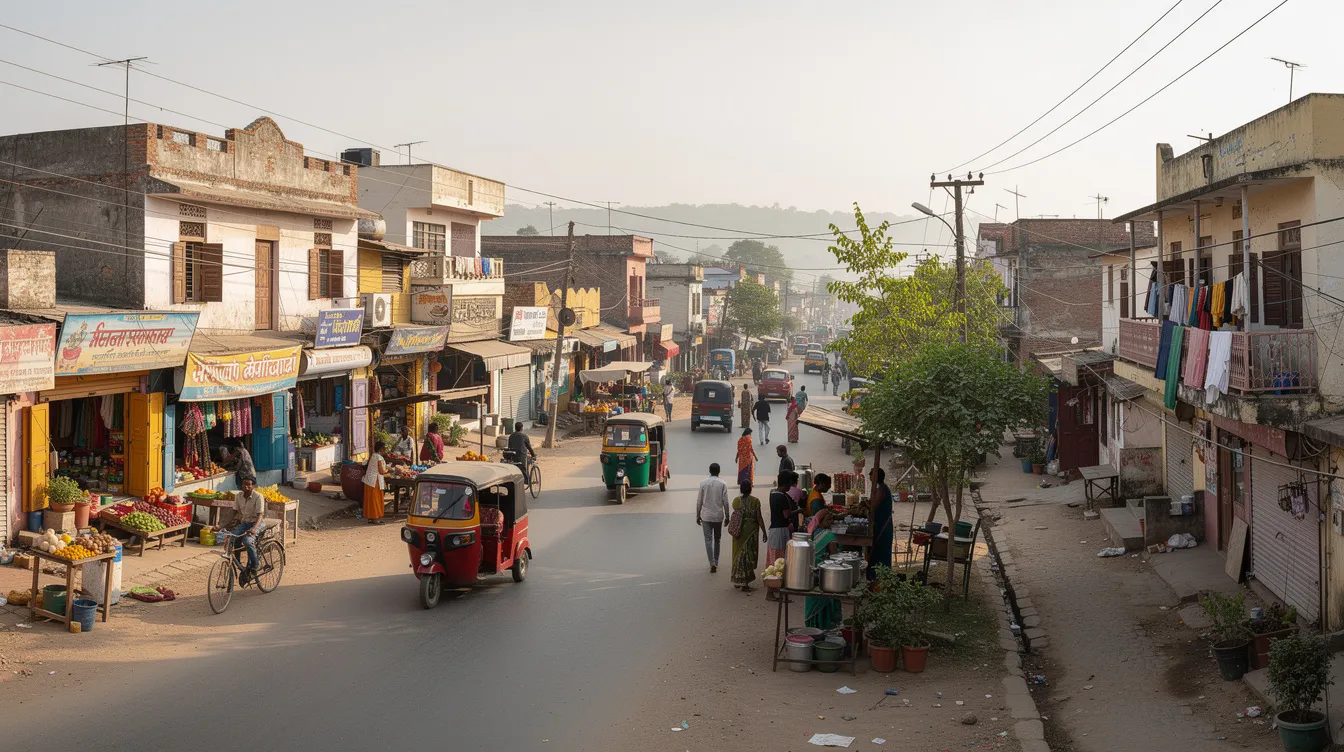
Everyone talks about startups in Bangalore or Mumbai, but honestly, some of the best opportunities right now are in smaller towns where competition hasn’t caught up yet. Good business ideas for small towns don’t need to be flashy — they need to solve a real, local gap.
Here’s where the real opportunity is hiding.
Why Small Towns Are Underrated Right Now
Quick answer: Small towns and Tier-2 cities offer lower rent, lower competition, and rising disposable income, making them genuinely fertile ground for business ideas that would struggle to stand out in oversaturated metro markets.
1. Branded Grocery or Kirana Store Chains
Organized retail hasn’t fully reached many smaller towns yet. A clean, well-stocked kirana store with better service than the unorganized competition can build strong local loyalty fast.
2. Coaching Centers for Competitive Exams
Demand for exam prep (banking, government jobs, engineering entrance) remains extremely high in smaller towns, often with fewer quality coaching options than metros.
3. Local Cloud Kitchen for Regional Cuisine
Picture an entrepreneur in a Tier-2 city near Jaipur who starts a cloud kitchen specializing in Rajasthani thali delivery. Lower rent than a full restaurant, and demand from working professionals who don’t cook daily.
4. Furniture and Home Decor Retail
As disposable income rises in smaller towns, demand for better furniture and home decor options is growing, but supply often remains limited or poor quality.
5. Financial and Insurance Advisory Services
- Many small-town residents remain underserved by proper financial planning
- Insurance penetration is still relatively low in many Tier-2/Tier-3 areas
- Trust-based, in-person advisory works especially well here compared to purely digital models
6. Organic and Local Farm Produce Delivery
Health-consciousness is rising even outside metros. Sourcing fresh, local produce and delivering directly to homes fills a real gap in many small towns.
7. Skill Development and Vocational Training Centers
Computer literacy, spoken English, tailoring, or basic digital marketing courses are in strong demand, especially among younger residents looking to improve job prospects.
8. Wedding and Event Planning Services
Quick answer: Wedding planning remains one of the strongest business ideas for small towns because families in these regions often spend heavily on weddings but lack access to organized, professional event planners.
9. Rental Services (Furniture, Equipment, Vehicles)
Rental businesses are still relatively rare in smaller towns compared to metros, despite clear demand for occasional-use items like party equipment or construction tools.
10. Digital Marketing Agency for Local Businesses
Most small-town businesses have almost no digital presence. A local agency offering basic website and social media services can find plenty of underserved clients. [link to related guide on digital marketing strategies here]
What Makes These Ideas Work Locally
The common thread across successful business ideas for small towns is filling a gap that’s already obviously there — not importing a big-city trend that doesn’t fit local buying habits or price sensitivity. Understand your specific town’s needs before copying a metro-city model directly.
FAQ
Q: Are small town businesses less profitable than city businesses? Not necessarily — lower operating costs often mean higher margins, even with smaller overall revenue compared to metros.
Q: What’s the biggest challenge in small town business setup? Access to skilled labor and reliable logistics can be more limited compared to bigger cities.
Q: Do I need a large investment to start in a small town? No, many of these ideas can start with modest capital due to lower rent and operational costs.
Q: Is online marketing effective for small town customers? Yes, increasingly so — smartphone and internet penetration has grown significantly even in smaller towns and rural areas.
Q: Which business idea has the fastest growth potential in small towns? Coaching centers and cloud kitchens tend to show fast traction due to consistently high local demand.
Q: Should I move to a small town to start these businesses, or can I run them remotely? Some, like digital marketing agencies, can be run remotely, but most benefit strongly from local presence and trust-building.
Conclusion
Small towns aren’t the consolation prize of entrepreneurship — for the right idea, they’re often the smarter bet. Less competition, lower costs, and steadily rising demand make several business ideas for small towns genuinely more profitable than their crowded metro counterparts. If you know a small town well, that local knowledge is worth more than you think — use it.
Suggested alt text for images:
- “Entrepreneur running a business in a small town market”
- “Local kirana store setup in a Tier-2 city”
- “Cloud kitchen preparing regional cuisine for delivery”